Library / Thought Leadership
Celtic Connections
What tools can we use to drive stronger partnerships in Scotland, was the question set at a members meeting in Edinburgh

Copied to clipboard


Library / Thought Leadership
What tools can we use to drive stronger partnerships in Scotland, was the question set at a members meeting in Edinburgh

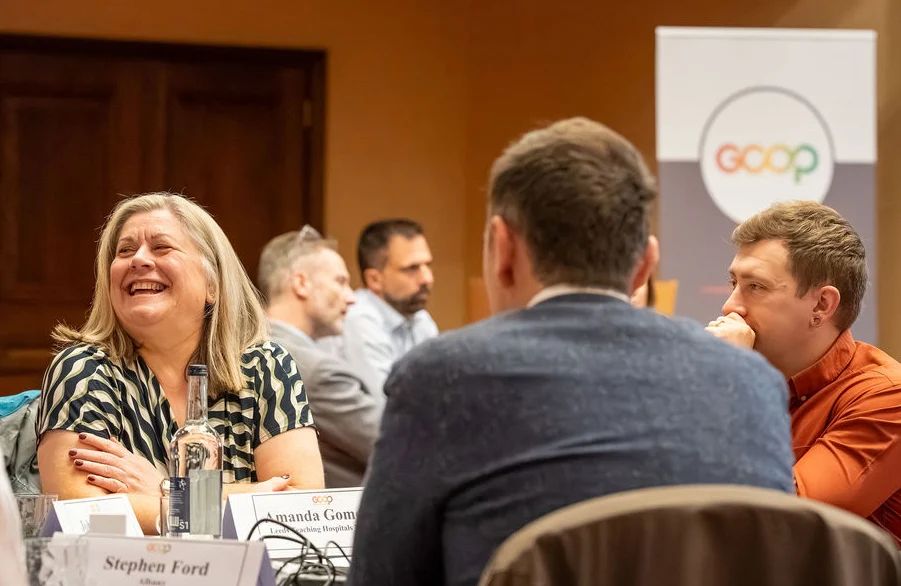
GCOP members active north of the border came together last month to offer their views on the challenges and opportunities facing operational PPP projects both now and in the future.
Hosted by member organisation Sheperd and Wedderburn, attendees included public and private sector organisations ranging from local authorities to governmental bodies, major construction contractors, funders and facilities management providers.
Topics raised included the importance of clear data sharing protocols, the need for early planning for post-expiry business cases, and the impact of political and financial constraints on public sector investment.
The meeting was held under the Chatham House rule, but by permission the summary of key themes discussed are shared below to provide you with an insight into a wide-ranging and informative discussion.
Data Management and Collaboration
One of the key issues raised was the importance of data management and the challenges of maintaining accurate records.
With many PPP contracts spanning decades the upkeep and maintenance of data records can become challenging as technology platforms and personnel change during its lifecycle.
There was acknowledged that data management can be resource intensive and often there was a lack of focus on maintaining accurate records in the middle term of a project.
However, having access to reliable data on the running of a project can become crucial as the contact end approaches.
One public sector-based participant flagged that without access to project data local authorities can struggle to understand the business case and cost implications of taking an asset or service back in-house or needing to retender a contract.
The shared view around the table was that there needs to be a more ‘open-book’ approach and clearly defined guidance on sharing and accessing information to encourage collaboration and trust in overcoming data management challenges.
Political and Financial Considerations
With multiple major national and local authority elections taking place across the UK and its regions before 2030, the likelihood is that political policies will have a major impact on how PFI and PPP projects are handled both in the short term and the future.
There was a view that the short nature of political cycles relative to the lengthy lifecycles of PPP projects was a real challenge, leading to a lack of clear decision-making and long-term planning.
By way of example, participants highlighted that infrastructure assets such as schools, hospitals and roads run under PPP contracts generally had the resources allowing them to be maintained and run to a higher standard than those reliant on public funding.
This presented significant issues when an asset or portfolio of them was due to be handed back to public ownership and there is not sufficient support to sustain it at the same level due to budget deficits.
One delegate present highlight that local authorities often viewed a PPP contract ending as a cash saving on the balance sheet – when in reality the funding needed to maintain that asset, possible capital expenditure to renew it plus the loss of central government grant funding of the contract meant that the authority was going to be picking up a much higher cost than anticipated.
The political pressure on public bodies to declare savings by issuing new tenders with a focus on ‘lowest cost’ and trying to save money by penalising PPP service providers with deductions was also raised.
The common view in among those present was that on reality is that such situations are often a false economy and not reflective of actual savings, while penalties actually lead to poor service delivery due to damaged relationships with providers.
With that in mind a number of attendees underlined the need for best practices and universal standards to be shared with all parties involved in operational projects to help improve and inform future models.
Decarbonisation and Climate Adaptability
As chair of the roundtable Amanda Nicholls, CEO of GCOP, asked those gathered if there was an opportunity to improve the environmental performance of assets within operational PPP projects at the point of handback or contract renewal in order to deliver net zero targets and futureproof buildings.
Positive examples were highlighted around using project data reviews to achieve significant energy savings through simple operational changes such as temperature settings and automated building controls.
One expert noted that due to age profile of certain buildings the gap between the standards they were built to when new and how far the requirements to comply with modern net zero regulations had progressed it was very challenging to upgrade them to be compliant – and in some cases it may even be more cost-effective to build a new structure.
The contractual complexity of upgrading operational PPP projects with new net zero technology was also raised. In a major infrastructure project there was an opportunity to add solar panels to a site, with enthusiasm for the proposal from all stakeholders involved.
However, the need to revisit contractual arrangements and risk variations with multiple parties to the project mean that the process simply became too time-consuming and expensive to move forward to the frustration of all concerned.
There is clearly a need for innovation in how such processes are handled to address these challenges and ensure the sustainability of PPP projects
Future Opportunities and Public-Private Sector Collaboration
While the policy landscape for future PPP projects is yet to be clarified, the delegates agreed that despite the challenges discuss there was clearly scope for fresh thinking and new opportunities to emerge in the years ahead.
Key points put forward for further discussion at future GCOP events included:
The feeling is that requires all parties involved in projects to pull together to resource handbacks appropriately (treating it as a project separate from operational contract management), project management advisors and legal technical support collaboration during it, and open sharing of lessons learned.
Getting this right was identified as the key to transitioning from PPP to other service delivery models – and ultimately making sure that future projects in the UK are attractive to private sector investors so that the country’s need for infrastructure funding can be met.
Whether public or private sector, our members are committed to driving operational excellence and best practice for stakeholders and end users